

The Trixability Project
The "why" of the projectPeople with disablities can contribute in their own ways if you only LET THEM
However, so many times, we're not even given a chance! Just because it's what you, as a neutotypical person, are not used to...
I have made it my life's mission to help people tell their stories and dare to take up space in this world, because this world should be built for everyone!How I'm doing that is by leading by example. I've spoken a lot on my YouTube channel about trauma and living with disabilities.What does that even do?, You might ask. I believe in storytelling and sharing to make a more open world. And by the way, I'm also doing other things, like having a disability related digital shop, writing articles, having a podcast, offering helping services, etc.
Hey! I’m Trix and I have a disability. That’s why I call this project of sharing “Trixability” which is twofold: Trix’ disability but also Trix’ ABILITY to share!
I have Autism, ADHD, Dissociative Identity Disorder and C-PTSD (complex post-traumatic stress disorder). And yes, all of these are formal diagnoses, I have them "on paper" and I got them from a licensed therapist. While I understand why people self-diagnose (and have generally nothing against it, it's hard to be evaluated!), I just want to emphasise that I have not done that. I have been evaluated by mental health professionals.
I also have several physical disabilities which you can read about below.
I have a lot of education in the psychology, philosophy and behavioural sciences fields. So I come from both a person educated in this and a person who has the condition themselves. And I think that is a unique and valuable viewpoint. I sure have a lot to share.
Autism
SOME FACTS
Autism Spectrum Disorder is a neurodevelopmental disorder, meaning you're born with it and it usually shows signs already in early childhood and even adolescence.
People with autism have different strengths and weaknesses, but the main areas that we're different in is communication, sensory processing, social interaction, information processing and because of all of this, the need for a structural environment.
Autism has nothing to do with IQ (intelligence/logical thinking) nor has it to do with EQ (emotional intelligence), it has more to do with how we interpret information and the output afterwards.
ADHD
SOME FACTS
Attention Deficit Hyperactivity Disorder doesn't need to mean that your an extrovert or have a lot of energy. On the contrary, energy is not the same as hyperactivity! Many ADHDers are tired due to constant hyperactivity in the brain and it often leads to burnout.
ADHD and Autism is commonly referred to as AuDHD and is totally different from just having ADHD or just having Autism! It makes a unique combination, but it differs from person to person, of course.
Not all people with ADHD have problem with concentration. Attention and concentration is different things, and actually, hyperfocus is common in ADHD people. That means that we actually are good at focusing on a thing for a long time, and get all into it!
C-PTSD
SOME FACTS
Stands for Complex Post-traumatic stress disorder and is a chronic form of post-traumatic stress after repeated trauma.
It affects the entire life, from managing everyday tasks to interpersonal relationships.
Common symptoms are flashbacks, nightmares, dissociation either physical or psychological, shut-downs, amnesia, hyoervigilence and an unhealthy level of alertness.
Dissociative Identity Disorder
SOME FACTS
DID is a trauma-based diagnosis and a form of chronic post-traumatic stress disorder. It only affects people who had prolonged periods of trauma, and most often in early childhood combined with re-victimization in adulthood.
When a person has DID, they have different alters (or "parts") that has different traits, ages, appearences, voices and even hobbies and interests. The person can switch between alters in dissociation meaning when they are in a "shut-down" from reality.
Amnesia is a common symptom of DID switching although alters don't always come out for others to see. Sometimes a person which internally, and sometimes people with DID also remember the switch. So although amnesia is common and a requirement to get the diagnosis, it's not something that happens 100% of the time!
HSD, EDS, POTS
SOME FACTS
Hypermobile Spectrum Disorder, shortened HSD, and EDS (Ehlers-Danlos syndrom) are connective tissue disorders that affect joints, muscles and internal organs.
HSD causes chronic pain in muscles and joints; joints that disconnect or partially disconnect (or they can move out of order with a “clicking sound” which is terrifying and painful and it happens to me all the time), it causes abdominal issues, breathing difficulties and it affects the skin that is very soft and fragile.
HSD and EDS are closely tied to hypermobility, which means the joints are more mobile and flexible and that causes harm to the body long-term, since they often dislocate and such. EDS also affects the internal organs and entire body, from the endocrine system to the veins.
Treatment for HSD and EDS includes specialized workouts and rehabilitation with a physician, mobility aids, aiding tools for joint stability and medical treatment for the pain, breathing and the other symptoms alone. However, there is no more complete “cure” or medical treatment for the overall condition.
HSD/EDS often comes with POTS, which is short for Postural Orthostatic Tachycardia Syndrome and is a heart condition.
POTS causes dizziness and a high resting pulse. It can cause problems when moving positions and doing fast moves.
POTS can be managed with medication in some cases.
I’m still seeing specialists to get a POTS diagnosis; it’s always a battle before you actually receive medical care in Sweden! I will write here if and when I get an official diagnosis; either correct it if it is something else or confirm it if it is POTS.
I’ve got both the EDS and HSD diagnoses, but it will be much more done before we know which type of EDS I have, since there are 13 types.
We also suspect MCAS - Mast Cell Activation Syndrome. More information later.
Polyendocrine Metabolistic Ovarian Syndrome
SOME FACTS
This condition was known before as PCOS - Polycystic Ovary Syndrome.
Many people (like me) with PMOS/PCOS are clinically infertile. And those who are able to get pregnant and want that, often need help to do that. Although, the amount of medical treatment or type of treatment can be different depending on how "easy” or “difficult” it is for you. Some will need little help like medication, and some will need more complicated procedures like IVF (in vitro fertilization) to be able to conceive.
Symptoms vary a lot. I don't get periods at all, but I do get symptoms of a period sometimes, although not the bleeding. Some people get light bleeding sometimes and some get none for an amount of time and then very heavy bleeding when it “eventually shows up”.
"Stubborn belly fat" is a common symptom of PMOS. My stomach is very swollen very often. This has to do with hormonal changes that affect the metabolism in our bodies, and make it work really slowly.
A lot of facial hair and body hair is common. I get facial hair often but luckily the high amount of testosterone doesn’t make it so I have that much body hair so it’s mostly face and head, haha! Often with this much testosterone people can have serious problems with the growing of hair.
Because yes, even though we are people with uteruses who have this disorder, we have more testosterone than most other people with uteruses. This hormonal imbalance affects things like voice, muscles, hair and even facial traits like one’s jaw or cheeks!
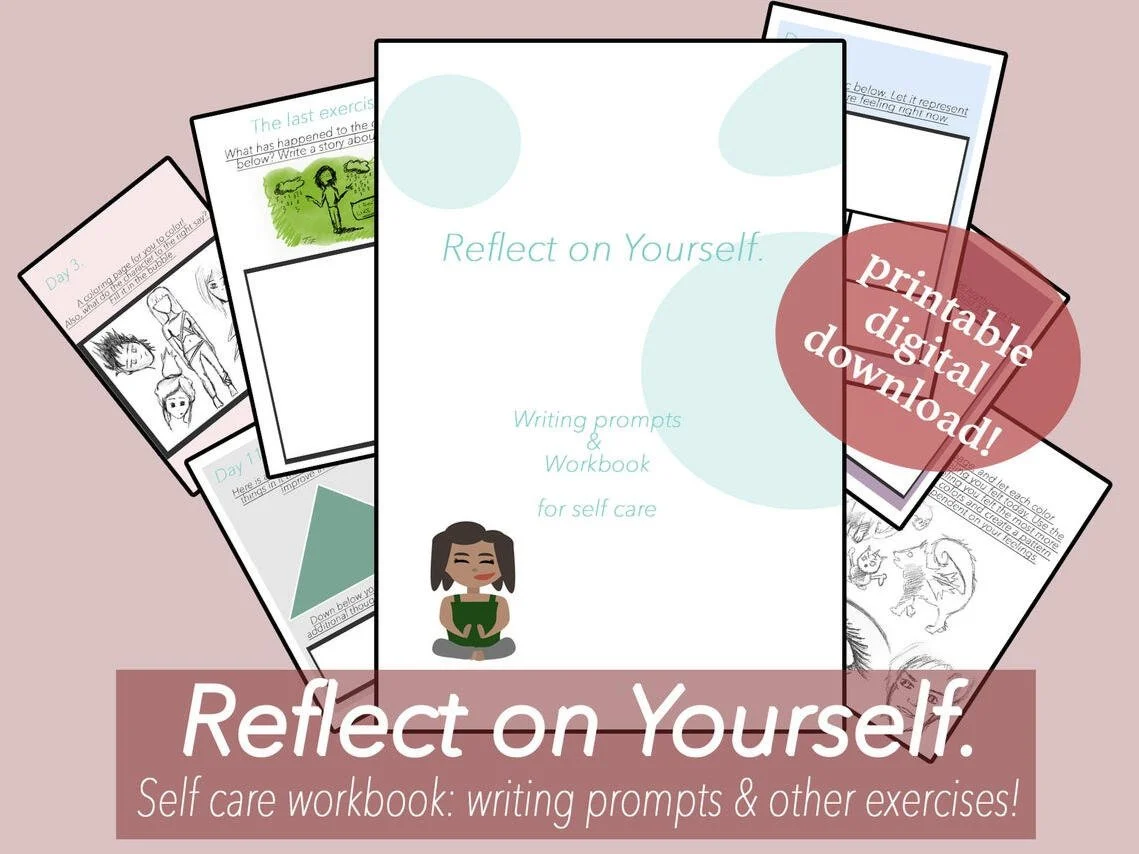
Disability related products
Visit my shop if you're curious on products:
For disabled and neurodivergent folks
For self-growth
For late bloomers
How you can help
Learn by subscribing to the newsletter.
Share our content that you find helpful on social media.
Support us via the shop if you are able to.
Just interacting with me on social media, like subscribe to my youtube channel means a lot!
Share your own story and tag us with #thetrixabilityproject on social media (only share so much you're comfortable with!).